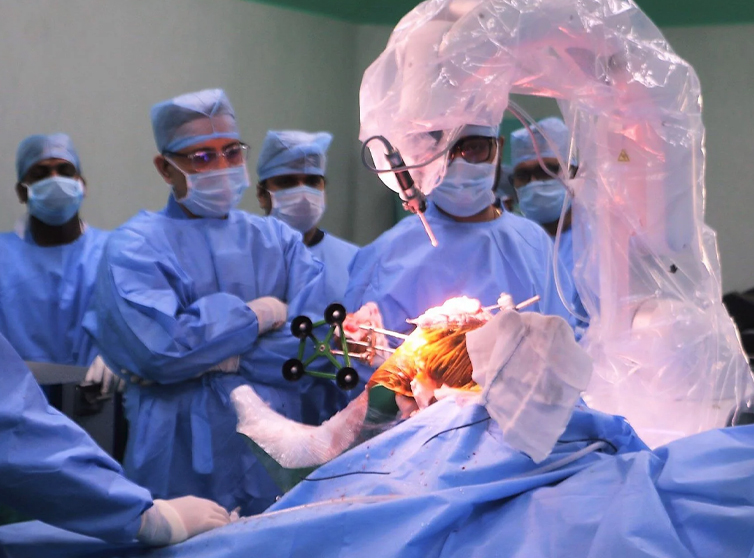
Precision-Based Minimally Invasive Joint Replacement

  • High Accuracy
  • Faster Recovery
  • Minimal Pain

Get back onto your natural joint function with robot-assisted, accurate care.

Robotic Knee Replacement

Targeted Surgical Care for Partial Knee Joint Damage

Are you experiencing persistent knee pain but are apprehensive about the size of the incisions, the length of the recovery period, and the accuracy of the surgical procedure?

It is very natural for many patients to get surrounded by the fear of extensive surgery once their doctor recommends knee joint replacement surgery for them. The uncertainty often leads to treatment delays, causing further worsening of knee pain, stiffness, and swelling.

Then, robotic knee replacement surgery can be the solution for their concerns. It’s a technically advanced approach that combines surgeon expertise with robotic precision. It provides highly accurate implant positioning, less damage to nearby tissues, and an early return to daily activities.
What Is Robotic Knee Replacement?

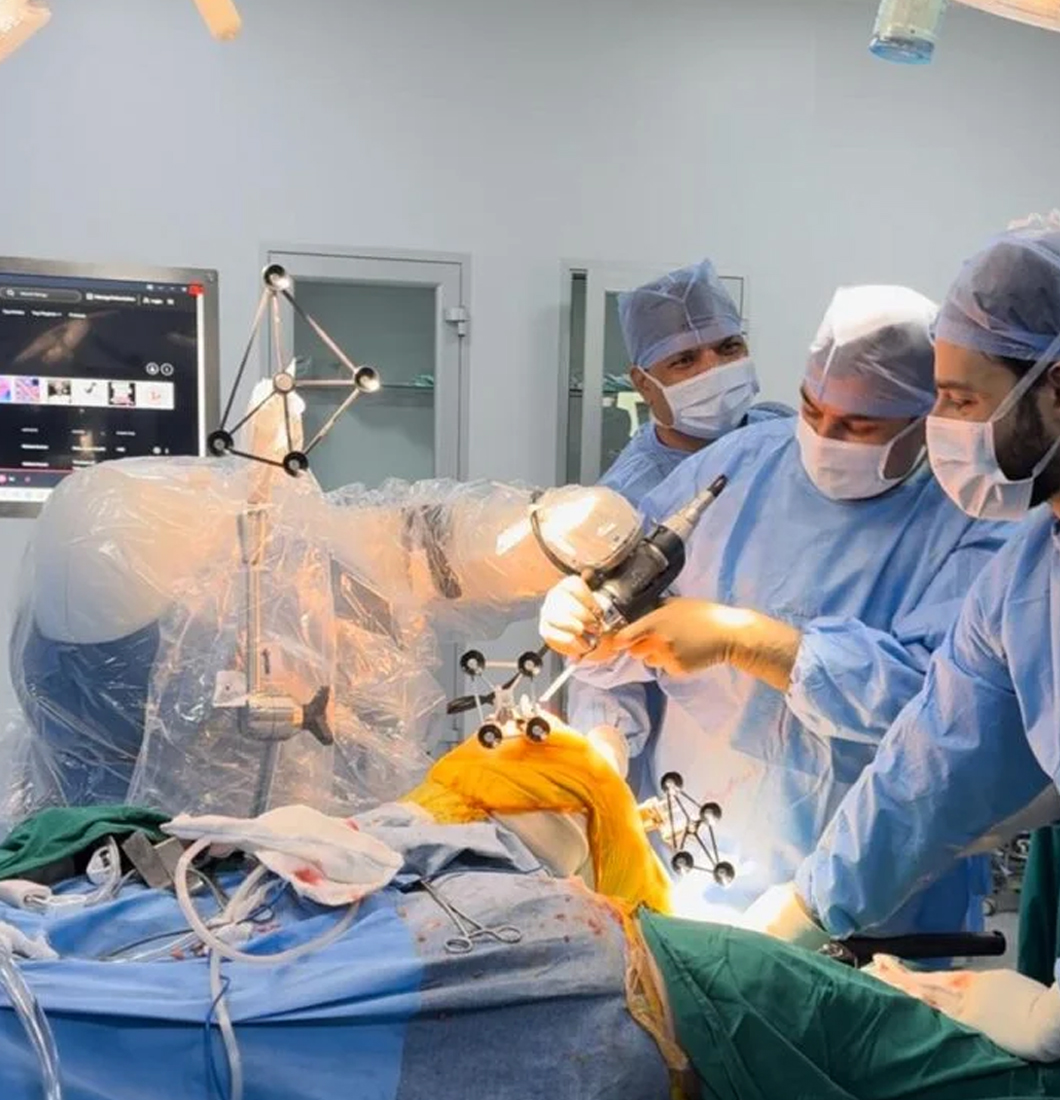
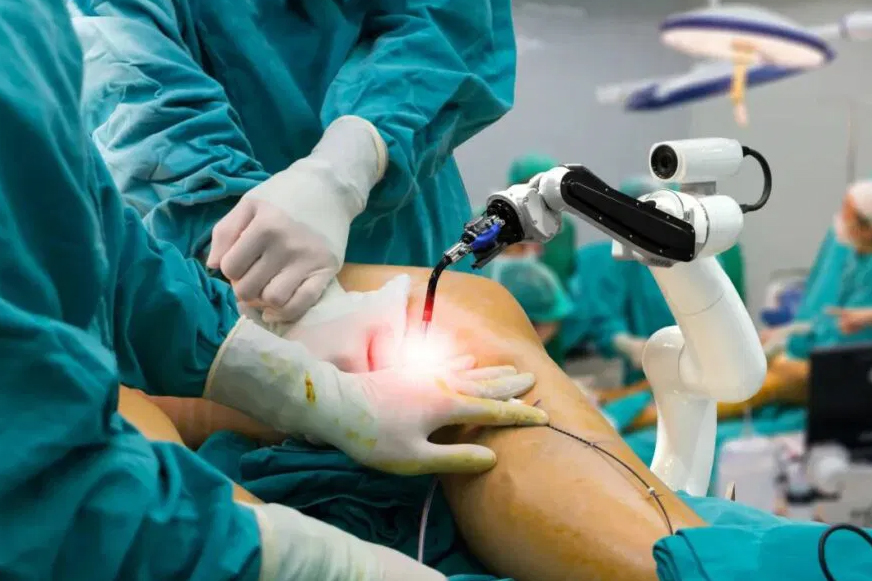
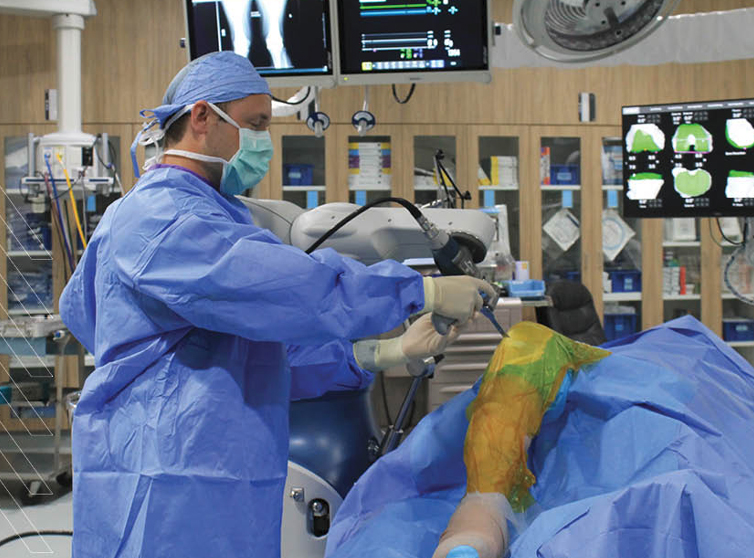
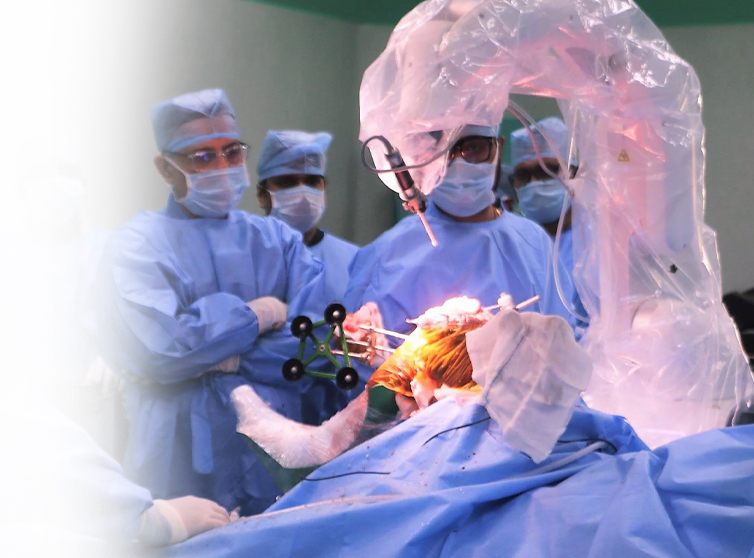
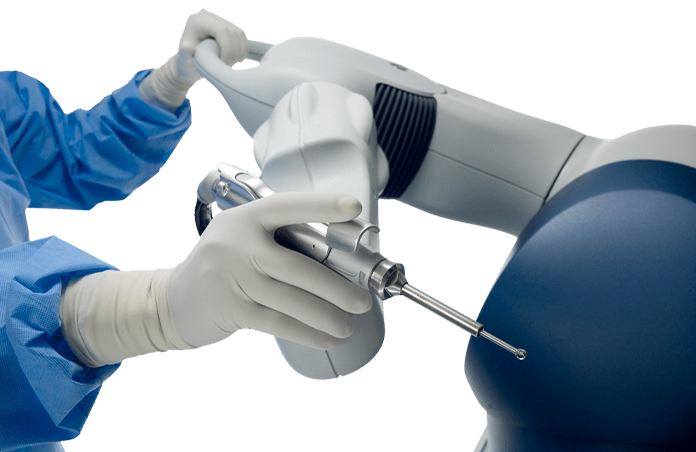
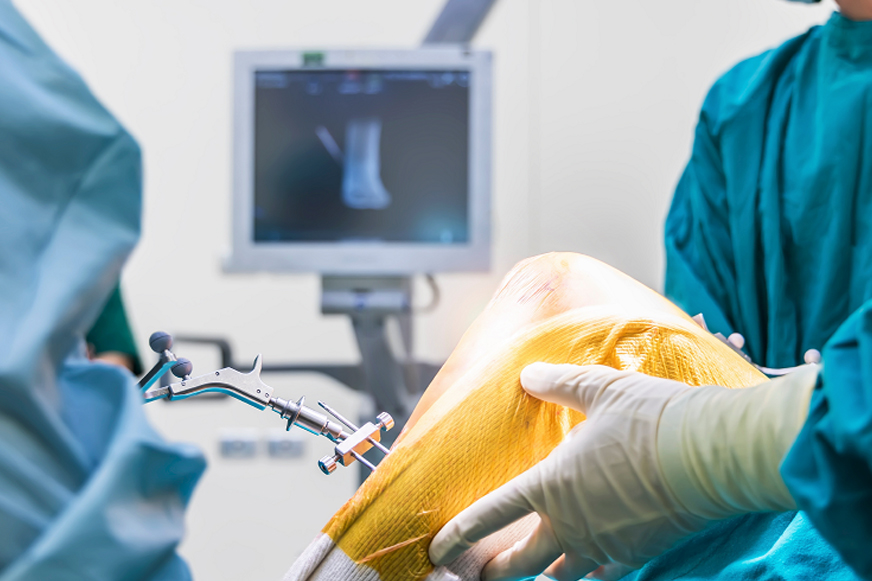
Robotic knee replacement is a type of knee replacement surgery that is performed with an advanced approach where the surgeon sits on a console near the patient and controls the robotic arms to replace the damaged knee joint with artificial implants. The robotic surgical system is positioned and adjusted over the surgical site.

This technique leads to high accuracy of implant positioning without the scope of human errors. The robotic assistance helps in both planning and executing the surgery with the best possible outcomes. Both total and partial knee replacements can be done with this robot-assisted approach.

Before the Surgery:

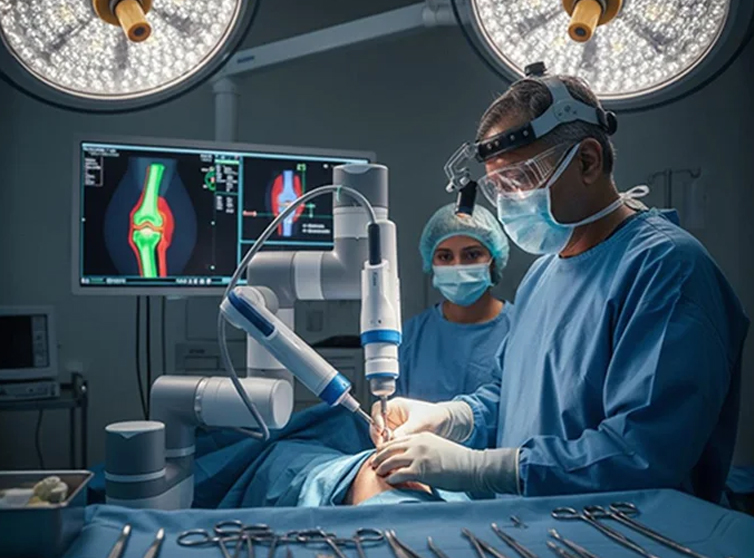
A 3D model of the knee is created using high-end robotic imaging tools that help with:

  • Personalised surgical planning
  • Accurate assessment of joint anatomy and alignment
  • Preplan the implant positions
During the Surgery:

The advanced surgical setup helps with:

  • Real-time feedback
  • Assists in controlled bone preparation and accurate implant placement
  • Complete control of robotic arm movements in the surgeon's hands throughout the procedure

When Is Robotic Knee Replacement Surgery Indicated?

For robotic joint replacements, patient selection is critical. Our team will carefully evaluate each patient and recommend knee replacement based on clinical evaluation, lifestyle needs, and faster functional recovery. Other considerations are:

  • Knee pain persists despite medications, injections, and physiotherapy
  • Precision in alignment and implant positioning is critical
  • Partial or total knee replacement is required
  • Knee deformities requiring precise correction
  • Severe issues in joint alignment

Knee Conditions Treated with Robotic Knee Replacement

Our specialists have years of experience in delivering successful robotic knee replacement surgeries to treat joint damage caused by a wide range of knee conditions. These are

How Is Robotic Knee Replacement Different From Other Techniques?

The core surgical principles remain unchanged for all the joint replacement techniques, but knowing the difference between these can help patients make informed decisions:

Robotic Knee Replacement

  • Uses computer-assisted robotic guidance
  • Personalised pre-operative 3D planning
  • Higher accuracy in bone cuts and implant placement
  • Real-time alignment and soft-tissue balance feedback
  • Potential for reduced soft-tissue damage
  • Supports faster functional recovery

Open/Conventional or Other Minimally Invasive Surgery

  • Performed entirely with manual instruments
  • Standard intraoperative planning
  • Accuracy depends on the surgeon's estimation
  • Alignment assessed manually
  • Greater tissue handling
  • Recovery varies based on surgical trauma

Implants Used in Robotic Knee Replacement

The following are the types of specialised implants designed to fit only the affected part of the knee joint:

Femoral Component

  • Covers the damaged portion of the thigh bone
  • Made from cobalt-chromium or similar alloys
  • Allows smooth joint movement

Tibial Component

  • Metal base fixed to the affected area of the shinbone
  • Supports body weight in the treated compartment

Polyethylene Insert

  • High-quality medical plastic spacer
  • Acts as a cushion and reduces friction

Factors Affecting Implant Selection in Robotic Knee Replacement

Implant selection mainly depends on the following factors:

  • Age
  • Bone quality
  • Bone and joint anatomy
  • Activity levels
  • Type of disorder
  • Extent and location of cartilage damage
  • Knee alignment and ligament stability
  • Surgeon’s intraoperative assessment

Surgical Approaches for Robotic Knee Replacement

Based on the above-mentioned factors, our specialists will advise you on either a robotic partial or total knee replacement:

Robotic Partial Knee Replacement

This approach is considered when knee damage is confined to a single compartment. Robotic assistance helps by:

  • Accurately identifying the affected compartment
  • Replacing only the damaged portion of the joint
  • Preserving healthy bone, cartilage, and ligaments
  • Supporting more natural knee movement
  • Allowing smaller incisions with minimal soft-tissue disruption
  • Reducing post-operative pain and recovery time

Robotic Total Knee Replacement

This approach is recommended when damage involves multiple compartments of the knee. Robotic guidance supports:

  • Detailed pre-operative planning using 3D imaging
  • Precise bone preparation and implant placement
  • Optimal joint alignment and soft-tissue balance
  • Consistent surgical accuracy across the entire joint
  • Improved long-term joint function, especially in complex or deformed knees

Right Candidate for Robotic Knee Replacement

The following conditions make you an eligible candidate for robotic knee replacement:

  • Knee arthritis is non-responsive to conservative treatment
  • Complex knee anatomy
  • Failed non-surgical treatments
  • Functional limitations affecting daily activities
  • Need for early recovery

What to Expect During and After Surgery

The surgery usually lasts 1–2 hours, depending on the procedure type. Robotic assistance helps ensure precise bone preparation and implant positioning.

Recovery and Long-Term Outcomes

The recovery after robotic surgery is faster than the other minimally invasive or open approaches. The long-term outcomes for this surgery are way better than those of the open surgery.

Our modern knee implants are selected and positioned in such a way as to last for 15–20 years or longer, especially with appropriate activity modification and follow-up care.

Dr. Ishwar Bohra

#Robotic Joint Replacement and Arthroscopic

Dr. Ishwar Bohra is currently the Senior Director at BLK-Max Hospital with over 24 years of experience in Joint Replacement and Arthroscopic.


Education

  • MBBS, M.Ch. (Ortho), MS (Ortho), MAMS
  • Fellowship in Arthroscopy and Sports Medicine, Barcelona, Spain
  • Fellowship in Upper limb Surgery (Shoulder) Upper Limb Unit, Scotland, UK
  • Fellowship in Knee Replacement and Arthroscopic Surgery, NHS, UK

Experience

  • Presently working as a Senior Director in BLK-Max Centre for Orthopaedics, Joint Reconstruction & Spine Surgery at BLK-Max Super Speciality Hospital, New Delhi
  • Spine Consultant - Jaipur Golden Hospital, New Delhi
  • Attending Consultant - Dr B.L. Kapur Memorial Hospital, New Delhi
  • Senior Resident - Deen Dayal Upadhyay Hospital, New Delhi.
Learn More
Neuro Rehabilitation Programs

Our Technologies

Patient Stories

Lorem ipsum dolor sit amet, consectetur adipisicing elit. Excepturi minus tenetur sunt aspernatur vitae. Lorem ipsum dolor sit amet, consectetur adipisicing elit. Lorem ipsum dolor sit amet, consectetur adipisicing elit.

Patient Stories
video icon

Meet Mrs. Chandra, a 53-year-old patient who triumphantly overcame varus and FFD deformity under the care of Dr. Ishwar Bohra. Enduring six years of leg issues and unsuccessful treatments, Mrs. Chandra's plight took a turn for the better when she sought help. Dr. Bohra's expertise and reassuring counsel guided her through the surgical process, utilizing advanced robotic techniques for optimal results.

Patient Stories
video icon

Mr. Austin Chisangu, from Zambia, had severe osteoarthritis that was causing him unbearable pain and difficulty in movement. His case was more challenging to manage because of his overweight, chronic cardiac issues, and a cardiac device implantation. Under the expert care of Dr. Ishwar Bohra and his dedicated team, Mr. Austin's condition was effectively managed.

Patient Stories
video icon

After struggling with severe osteoarthritis and carpal tunnel syndrome, Mrs. Baglees took the brave step to undergo Knee Replacement and Carpal Tunnel Release Surgery under the expert care of Dr. Ishwar Bohra at BLK-Max Super Speciality Hospital. This life-changing decision not only restored her mobility but also significantly improved her quality of life.

Patient Stories
video icon

After struggling with severe osteoarthritis, Savitri Devi made the brave decision to undergo knee replacement surgery with Dr. Ishwar Bohra at BLK-Max Super Speciality Hospital. Initially hesitant, her choice transformed her life—now, she’s well on her way to recovery and regaining her mobility.

Innovative Insights
Through Our Blogs

Discover expert articles, the latest healthcare trends, and practical tips curated to keep you informed and empowered. Our blogs bring you fresh perspectives, research-based knowledge, and innovative solutions.

F.A.Q

Frequently
Asked Questions

Contact Us
Q1: Does robotic knee replacement cause less pain?

A: Robotic assistance helps in tissue preservation and smaller incisions. This results in much less post-operative pain in comparison to other approaches.

Q2: Is robotic knee replacement a safe option?

A: Because of high precision and minimal damage to the supporting structures, robotic knee replacement is the safest and most effective option for joint damage that fails to respond to non-surgical treatment options.

Q3: Are both partial and total knee replacements possible with robotic assistance?

A: Yes, robotic assistance can be used for both procedures in suitable patients.