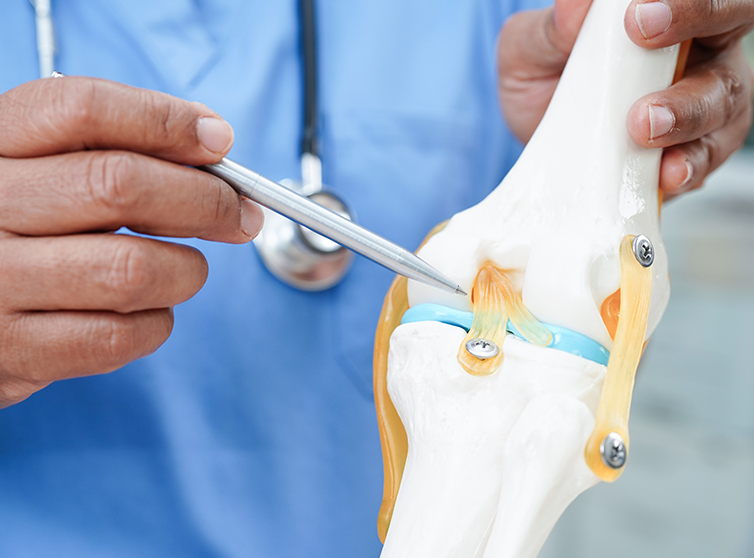
Revision Surgery for Failed Implants

  • High Success in Complex Revision Surgeries
  • Fast Recovery Even After Repeat Procedure
  • Specialised Implants for Bone Loss & Stability

Get back your joint function with specialised implants for revision surgery!

Revision Knee Replacement Surgery

Advanced Solution for Failed Knee Implants

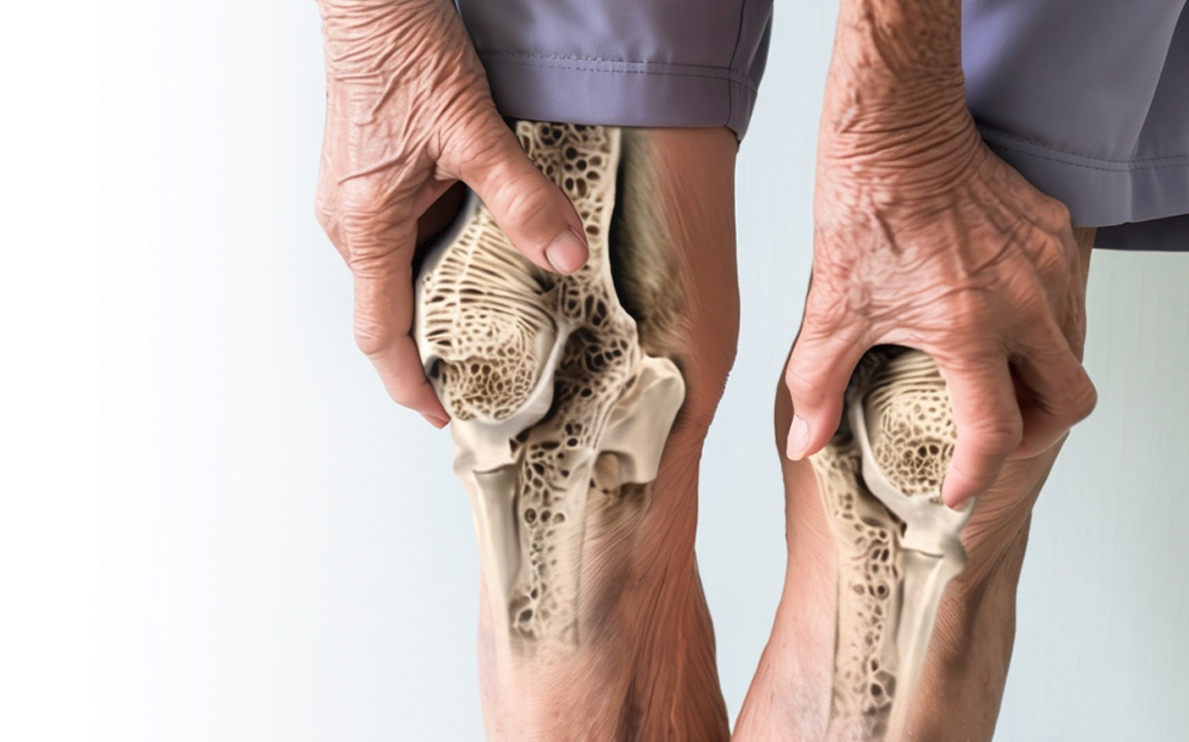
Knee replacement is among the safest and most successful surgical procedures. With this intervention, most patients can get back to their active and pain-free lives. On the other hand, mechanical issues like loosening, infection, or wear and tear might eventually cause a knee replacement implant to fail. Day-to-day tasks again become more challenging as the knee implant starts failing, causing pain, swelling, stiffness, or instability.

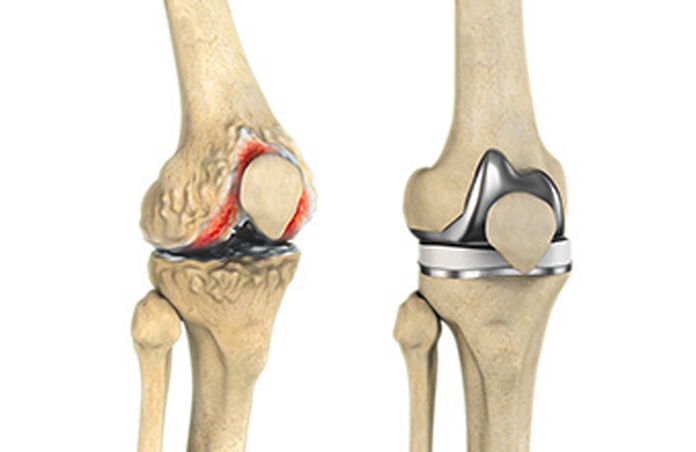
Revision knee replacement surgery is often considered when the implant starts to wear off, and your knee starts to pain again. The damaged implant is being replaced with the new one. Also, the damaged joint parts are repaired with specialised components. These procedures restore stability, relieve pain, and improve joint function.
What Is Revision Knee Replacement?

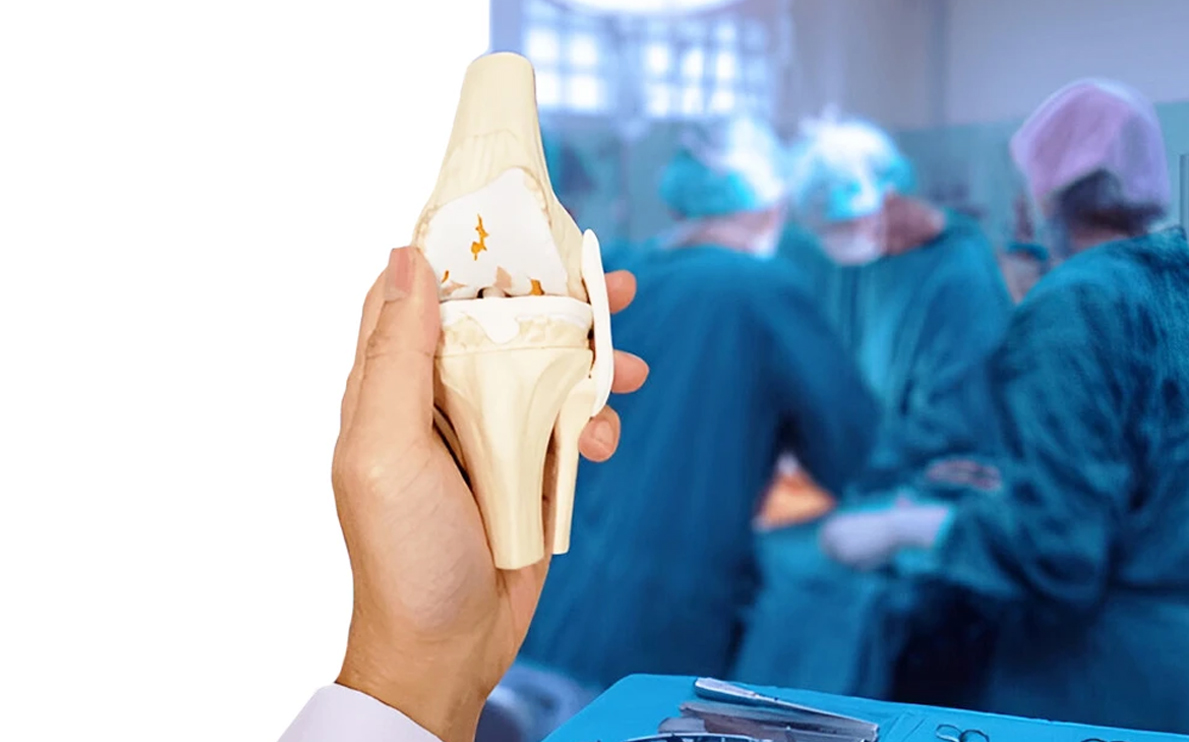
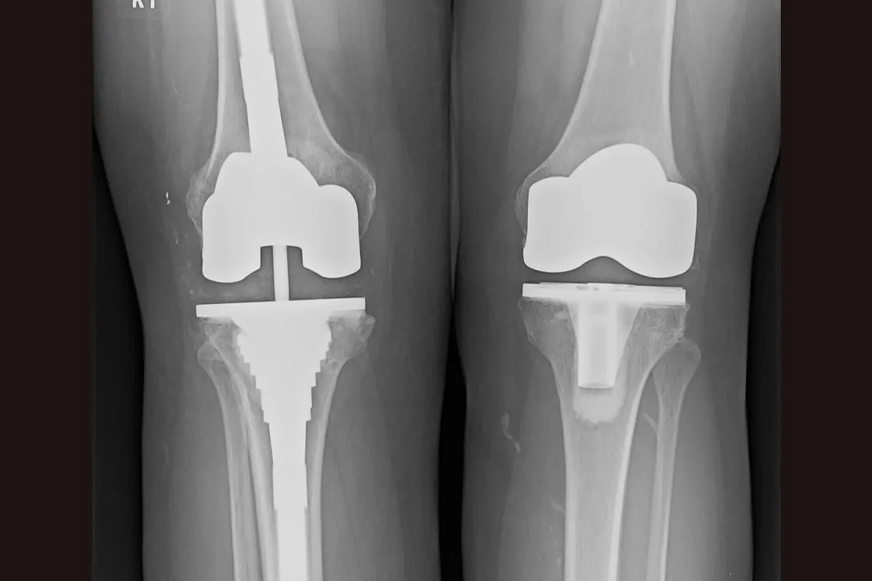
Revision knee replacement is a complex procedure that is carried out to replace one or more components of the previously placed knee implant. Only those parts are removed and replaced that are worn out or damaged. Our specialists are highly experienced to carry out all types of revision surgeries, ranging from single worn or loose components to advanced implant damage involving all the components—femoral, tibial, and patellar.

Due to these challenges, revision surgery necessitates meticulous planning before the procedure and highly skilled surgical abilities. Dr. Ishwar and his expert team have years of experience in carrying out such revision surgeries with the required surgical abilities, resulting in high success rates.

When Is Revision Knee Replacement Indicated?

If you experience the following symptoms even after knee replacement surgery, revision knee replacement may be considered:

  • Progressive knee pain after a previous knee replacement
  • Swelling, stiffness, or instability, even with an artificial knee joint
  • Difficulty in walking again
  • Visible implant loosening or wear on imaging tests
  • Infection around the knee implant
  • Fracture of the bone surrounding the implant

After a thorough clinical evaluation, imaging examination, and blood testing, your doctor will determine the reason for implant failure and whether revision surgery is necessary.

Conditions That Necessitate Revision Knee Replacement

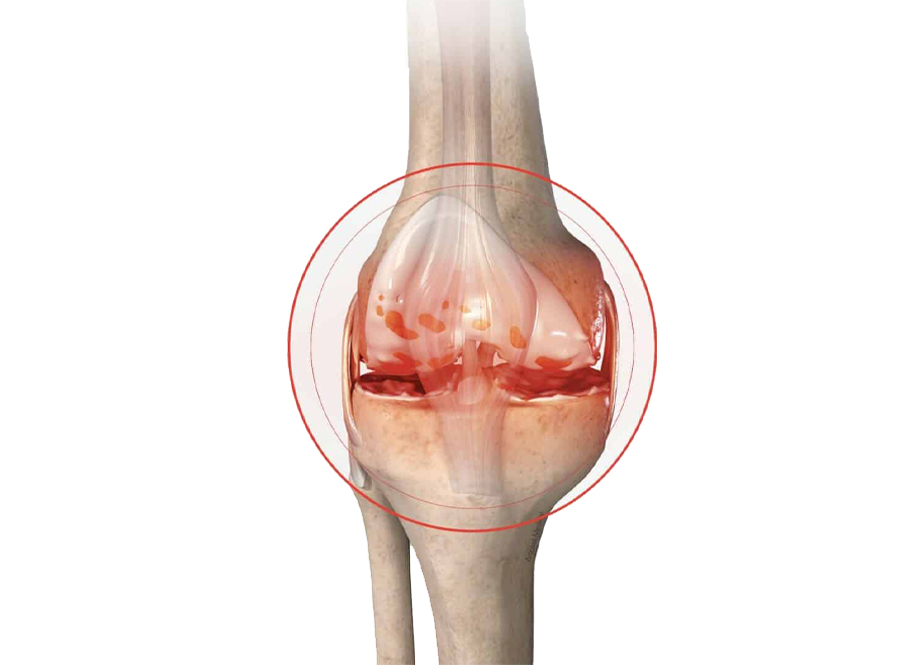
The following are the conditions that can lead to knee replacement failure and may necessitate revision surgery:

  • Progressive wear of implant components due to malpositioning of the implant
  • Implant loosening from the bone surface
  • Infection around the artificial joint
  • Ligament damage causing knee joint instability or imbalance
  • Persistent stiffness and limited range of motion
  • Fractures associated with the knee implant
  • Malalignment of the implant
  • Displacement of the implant

A revision knee replacement may be suggested only if non-surgical methods of symptom relief, like injections, bracing, physical therapy, or medication, do not work.

How Revision Knee Replacement Differs from Primary Knee Replacement

Knowing the difference between these two treatments can help patients make informed decisions:

Primary Knee Replacement

  • First-time knee replacement surgery
  • Standard implants used
  • Minimal bone loss
  • Shorter surgical time
  • Faster recovery

Revision Knee Replacement

  • Performed after failure of a previous implant
  • Specialised revision implants required
  • Often involves bone loss or damage
  • Longer, more complex surgery
  • Slower and more gradual recovery
Although both procedures aim to relieve pain and improve function, revision surgery is technically more demanding and requires specialised tools and implants.

Implants Used in Revision Knee Replacement

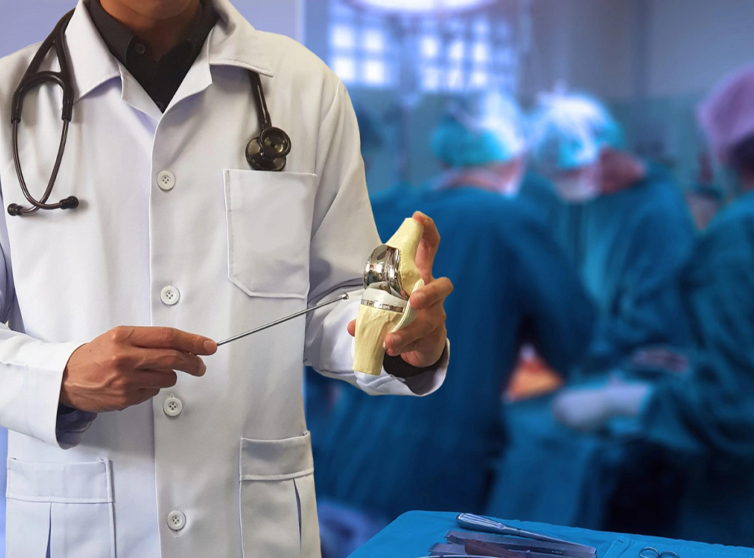
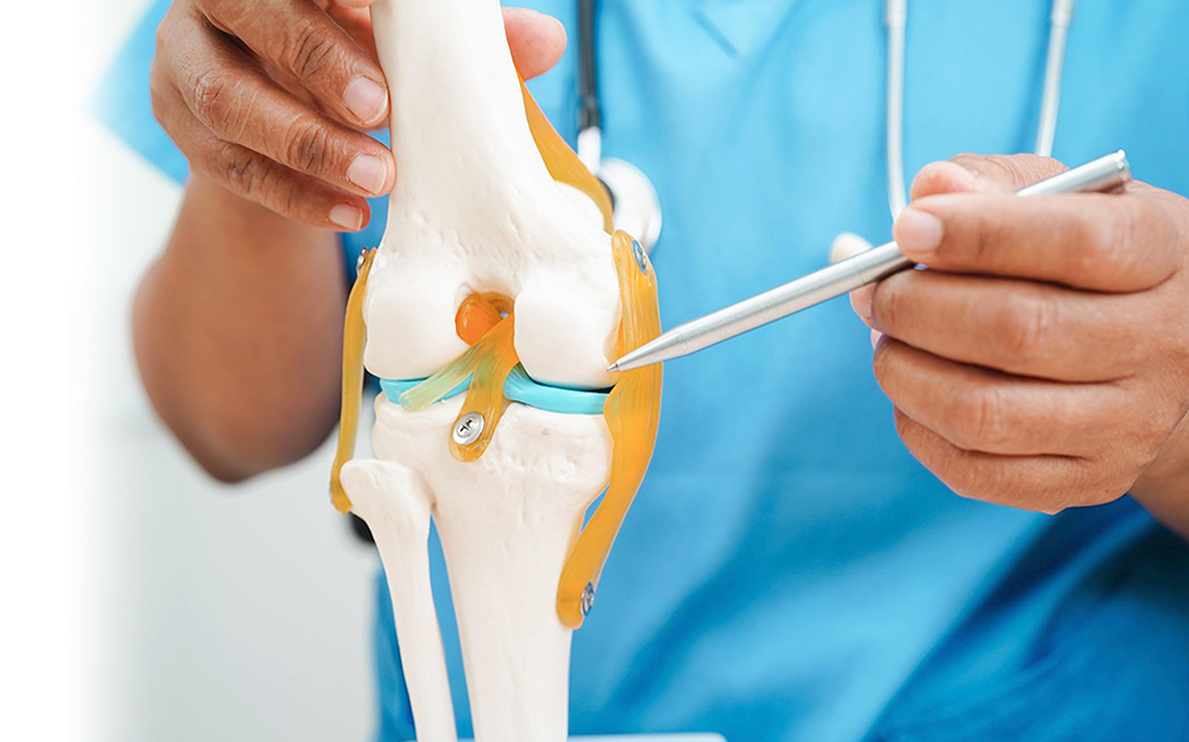
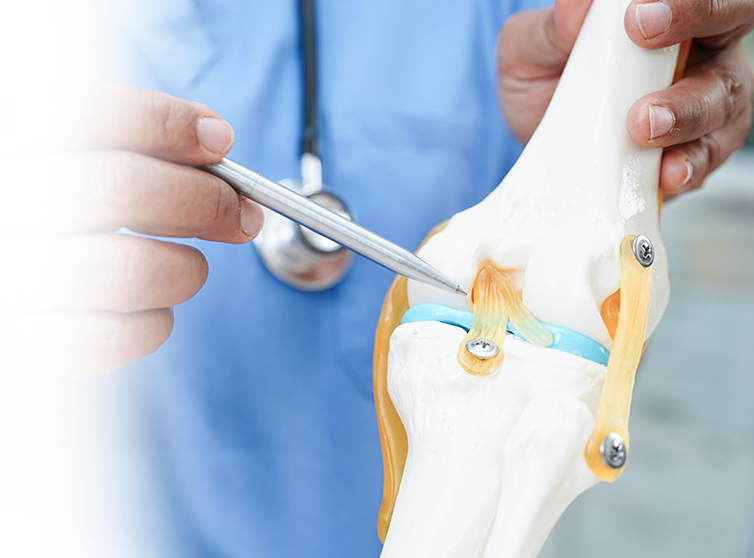
There are several components of a total knee implant (artificial joint or prosthesis), and each has a specific function:
Femoral Component
  • Covers the end of the thigh bone
  • Typically made of cobalt-chromium alloy or oxidized zirconium
  • Designed to allow smooth bending and straightening
Tibial Component
  • A metal base plate attached to the shinbone
  • Usually made of titanium or cobalt-chromium
  • Provides stability and supports body weight
Polyethylene Insert
  • A high-grade medical plastic spacer is placed between metal components
  • Acts as a cushion and enables smooth joint motion
  • Designed for durability and low wear
Patellar Component (When Required)
  • A polyethylene surface is applied to the underside of the kneecap
  • The selection of implants is based on the condition of the cartilage and the results of the surgical assessment.

Factors Affecting Implant Selection In Revision Knee Joint Replacement Surgery

Implant selection mainly depends on the following factors:

  • Age
  • Bone quality
  • Bone and joint anatomy
  • Activity levels
  • Type of disorder

Surgical Approaches for Revision Knee Replacement

The following are the techniques used for revision knee replacement, depending on patient needs and type of damage:

  • Conventional revision knee replacement: It is done using one long incision. It causes more tissue damage. It is opted for when there is widespread damage.
  • Minimally invasive approaches: It is done using smaller incisions and tiny surgical instruments. A small camera is also inserted in the surgical site to have better vision. It supports better implant positioning due to better surgical site vision.

The choice of technique is determined by the type of joint deformity, bone structure, and surgical planning.

Right Candidate for Revision Knee Replacement

The following factors make an individual eligible for revision knee replacement:

  • Severe knee pain is limiting daily activities
  • Marked stiffness and reduced range of motion
  • Knee deformity affecting alignment
  • Pain persists despite non-surgical treatments
  • Imaging evidence of advanced joint damage

Functional limitation, joint condition, and age determine your eligibility for revision knee replacement.

During Surgery

What to Expect During and After Surgery

Revision knee replacement may take longer than primary surgery. It may last several hours. The procedure includes:

  • Reopening the previous surgical incision
  • Careful removal of old implants and cement
  • Preparation and reconstruction of bone surfaces
  • Placement of specialised revision implants
  • Repair of surrounding soft tissues
  • Testing joint stability and motion
  • A drain may be placed to reduce fluid buildup
  • Incision is then closed

Recovery and Long-Term Outcomes

The recovery after the revision knee replacement is slower than the primary surgery. You may expect:

  • Step 1

    Longer hospital stay

  • Step 2

    Pain management for a longer duration

  • Step 3

    Need for early physiotherapy

  • Step 4

    Gradual improvement in mobility and endurance

Dr. Ishwar Bohra

#Robotic Joint Replacement and Arthroscopic

Dr. Ishwar Bohra is currently the Senior Director at BLK-Max Hospital with over 24 years of experience in Joint Replacement and Arthroscopic.


Education

  • MBBS, M.Ch. (Ortho), MS (Ortho), MAMS
  • Fellowship in Arthroscopy and Sports Medicine, Barcelona, Spain
  • Fellowship in Upper limb Surgery (Shoulder) Upper Limb Unit, Scotland, UK
  • Fellowship in Knee Replacement and Arthroscopic Surgery, NHS, UK

Experience

  • Presently working as a Senior Director in BLK-Max Centre for Orthopaedics, Joint Reconstruction & Spine Surgery at BLK-Max Super Speciality Hospital, New Delhi
  • Spine Consultant - Jaipur Golden Hospital, New Delhi
  • Attending Consultant - Dr B.L. Kapur Memorial Hospital, New Delhi
  • Senior Resident - Deen Dayal Upadhyay Hospital, New Delhi.
Learn More
Neuro Rehabilitation Programs

Our Technologies

Patient Stories

Our patients’ trust is our driving force behind consistently high satisfaction rates and successful knee treatment outcomes. Read to know how our patients’ dedication and our unwavering efforts led to their mobility improvement, pain reduction, and renewed confidence in living freely.

Patient Stories
video icon

Meet Mrs. Chandra, a 53-year-old patient who triumphantly overcame varus and FFD deformity under the care of Dr. Ishwar Bohra. Enduring six years of leg issues and unsuccessful treatments, Mrs. Chandra's plight took a turn for the better when she sought help. Dr. Bohra's expertise and reassuring counsel guided her through the surgical process, utilizing advanced robotic techniques for optimal results.

Patient Stories
video icon

Mr. Austin Chisangu, from Zambia, had severe osteoarthritis that was causing him unbearable pain and difficulty in movement. His case was more challenging to manage because of his overweight, chronic cardiac issues, and a cardiac device implantation. Under the expert care of Dr. Ishwar Bohra and his dedicated team, Mr. Austin's condition was effectively managed.

Patient Stories
video icon

After struggling with severe osteoarthritis and carpal tunnel syndrome, Mrs. Baglees took the brave step to undergo Knee Replacement and Carpal Tunnel Release Surgery under the expert care of Dr. Ishwar Bohra at BLK-Max Super Speciality Hospital. This life-changing decision not only restored her mobility but also significantly improved her quality of life.

Patient Stories
video icon

After struggling with severe osteoarthritis, Savitri Devi made the brave decision to undergo knee replacement surgery with Dr. Ishwar Bohra at BLK-Max Super Speciality Hospital. Initially hesitant, her choice transformed her life—now, she’s well on her way to recovery and regaining her mobility.

Innovative Insights
Through Our Blogs

Discover expert articles, the latest healthcare trends, and practical tips curated to keep you informed and empowered. Our blogs bring you fresh perspectives, research-based knowledge, and innovative solutions.

F.A.Q

Frequently
Asked Questions

Contact Us
Q1: Is revision knee replacement safe?

A: Yes, it is safe. Since it's more complex, there is a higher risk of complications.

Q2: What is the recovery period with revision surgery?

A: Recovery after revision surgery is longer and gradual. It may take several months for complete recovery.

Q3: Can a revised knee implant last long-term?

A: Yes, many revision implants function well for years, especially with proper follow-up and activity modification.